Waking up is harder when the room is still dark. In winter, your alarm may go off before sunrise, making it feel like your body is being pulled out of sleep too suddenly.
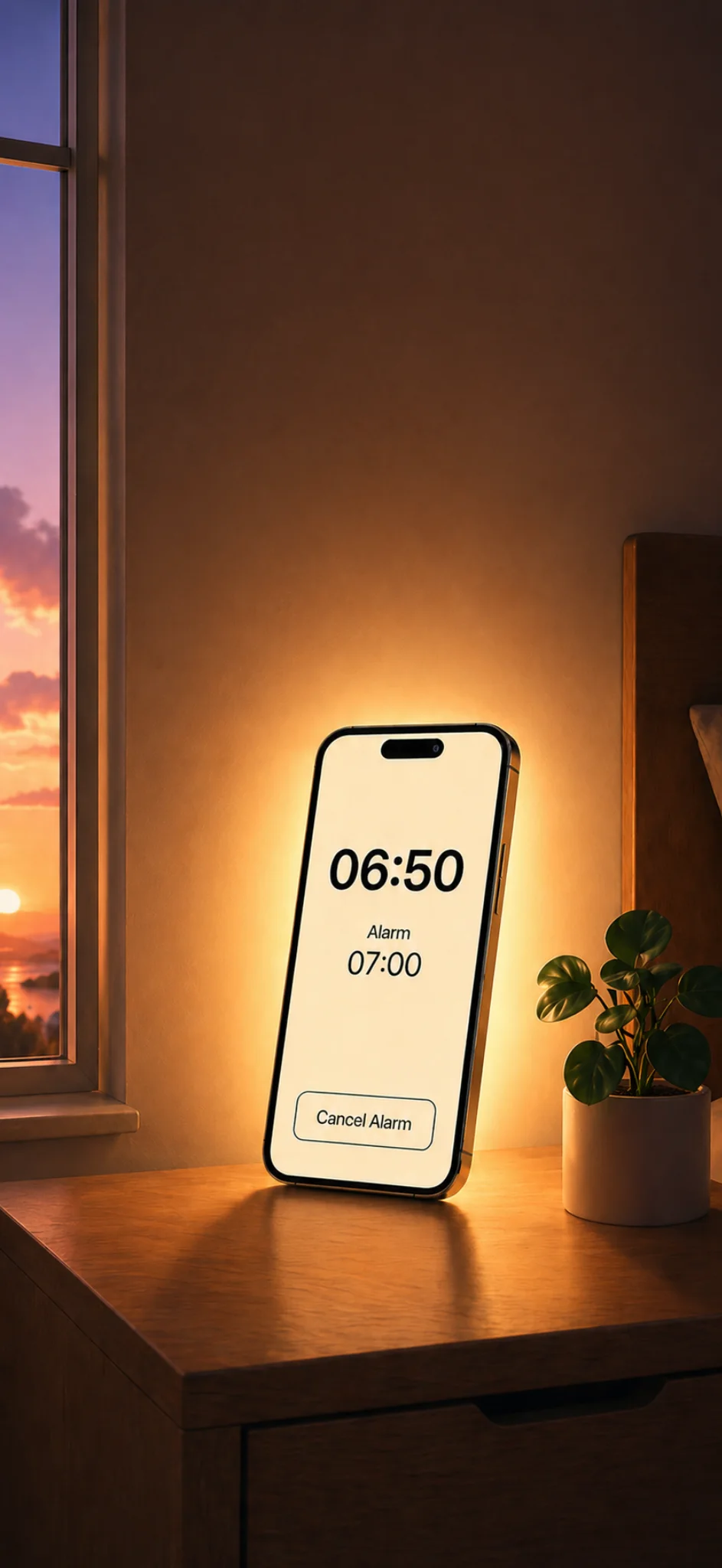
A sunrise-style alarm can help by bringing light into the room before your alarm sound plays. With Glow Alarm, you can use your iPhone as a warm wake-up light on dark mornings.
Why dark mornings feel so difficult
Light is one of the main cues your body uses to understand time of day. When your room is dark, your brain gets fewer signals that morning has started.
That does not mean one alarm app can solve every sleep problem. But it does mean your wake-up environment matters.
If your current routine is total darkness followed by a loud alarm, it makes sense that waking feels harsh.
Start with light before sound
A simple improvement is to introduce light before your alarm sound.
Glow Alarm lets your iPhone create a gradual sunrise-style glow before the alarm. Instead of waking from darkness straight into noise, you get a softer transition. If you are new to the idea, start with this guide to using your iPhone as a wake-up light.
Try setting the light to begin 30 minutes before your wake-up time.
For example:
- Wake-up time: 7:00am
- Light begins: 6:30am
- Sound plays: 7:00am
This gives your morning a more natural shape, even when the real sunrise is still hours away.
Place your phone where the light can work
On dark winter mornings, placement matters.
For the best effect:
- Keep your phone plugged in
- Put it on your bedside table
- Face the screen toward the room
- Avoid covering the flashlight or screen
- Use a stand if possible
The goal is not to flood the room with light. The goal is to create a clear morning cue near your bed.
Use a sound that does not make you dread waking up
Many people train themselves to hate their alarm sound.
If your alarm makes you tense immediately, try changing it. A gentler sound can still be effective if the volume and timing are right.
Good options include:
- Soft instrumental music
- Birds
- Gradual ambient sound
- A calm playlist
- A familiar song that starts gently
The combination of light plus sound often feels better than sound alone.
Keep your wake-up time consistent
Winter mornings become harder when your schedule changes dramatically from day to day.
You do not need a perfect routine, but consistency helps. Try keeping your wake-up time similar on weekdays, especially if you struggle with early starts.
A sunrise alarm works best as part of a repeatable pattern. If you are comparing what matters in an app, the sunrise alarm app checklist is a useful companion.
- Same bedtime window
- Same wake-up time
- Same light duration
- Same phone placement
- Same morning first step
Small routines reduce the number of decisions you have to make while half-asleep.
Make the first minute easy
Do not make your first action something difficult.
Instead of waking up and immediately checking messages, try one simple action:
- Sit up
- Put your feet on the floor
- Drink water
- Open the curtains
- Turn on a lamp
- Start coffee or tea
The first minute matters. If your alarm gets you awake gently, your next action should help you stay awake.
Open the curtains when you can
Even if it is still dim outside, natural light is useful once it is available.
After your alarm, open the curtains or blinds. On very dark mornings, turn on a room light as well.
Glow Alarm helps with the transition into waking. Your environment after waking helps reinforce that morning has started.
Avoid making the alarm too gentle
Gentle does not mean ineffective.
If you keep sleeping through your alarm, adjust the setup:
- Increase the volume
- Use a clearer sound
- Move the phone slightly farther away
- Make the light duration longer
- Use a backup alarm for important mornings
A calm alarm still needs to wake you.
When to seek extra help
If you regularly feel unable to wake up, feel exhausted during the day, or suspect a sleep disorder, consider speaking with a healthcare professional.
A sunrise alarm can support a better routine, but it is not a diagnosis or treatment for medical sleep problems.
Winter morning checklist
Before bed:
- Set Glow Alarm
- Plug in your phone
- Face the screen outward
- Choose a 30-minute light fade
- Pick a sound you trust
- Put water nearby
- Decide your first morning action
This small setup can make dark mornings feel less brutal.
Wake up gently, even before sunrise
Glow Alarm helps you bring a sunrise-style cue into your bedroom using your iPhone.
If winter mornings feel too dark, too sudden, or too loud, try waking with light before sound.