Quick answer: In the UK and most of Europe the clocks go back on the last Sunday of October; in the US and Canada, on the first Sunday of November. Mornings are lighter for a week or two, but by December sunrise is after 8am in most of the UK and northern Europe, and the latest sunrises come in early January, not on the shortest day.
How late does the sun rise?
Sunrise times in local time, for the city centre:
| City | 1 Nov | 1 Dec | 21 Dec | 1 Jan | 15 Jan |
|---|---|---|---|---|---|
| London | 06:52 | 07:43 | 08:03 | 08:06 | 07:59 |
| Manchester | 07:06 | 08:01 | 08:23 | 08:25 | 08:17 |
| Edinburgh | 07:18 | 08:18 | 08:42 | 08:44 | 08:34 |
| Dublin | 07:22 | 08:17 | 08:38 | 08:40 | 08:33 |
| Amsterdam | 07:35 | 08:27 | 08:48 | 08:50 | 08:44 |
| Berlin | 07:01 | 07:54 | 08:15 | 08:17 | 08:10 |
| Paris | 07:36 | 08:22 | 08:41 | 08:44 | 08:39 |
| Madrid | 07:44 | 08:18 | 08:34 | 08:38 | 08:36 |
| New York | 06:25 | 07:00 | 07:16 | 07:20 | 07:18 |
| Chicago | 06:22 | 06:58 | 07:14 | 07:18 | 07:16 |
| Toronto | 06:52 | 07:31 | 07:48 | 07:51 | 07:48 |
| Seattle | 06:52 | 07:36 | 07:54 | 07:57 | 07:53 |
Calculated with the standard NOAA sunrise formula and rounded to the minute. The sky starts to lighten about 30–40 minutes before these times.
If you get up at 7am, that means waking in the dark from around mid-November until well into February in most of the UK and northern Europe. For a lot of people, that's when getting out of bed starts to feel like a fight.
Why dark mornings feel harder
Your body clock uses morning light as one of its main signals that the day has started. When your alarm goes off in darkness, that signal hasn't arrived yet, so you're asking your body to wake up while it still thinks it's night. Grogginess, hitting snooze and that heavy first half hour are the result.
Six things that help
1. Get light before (or as) you wake
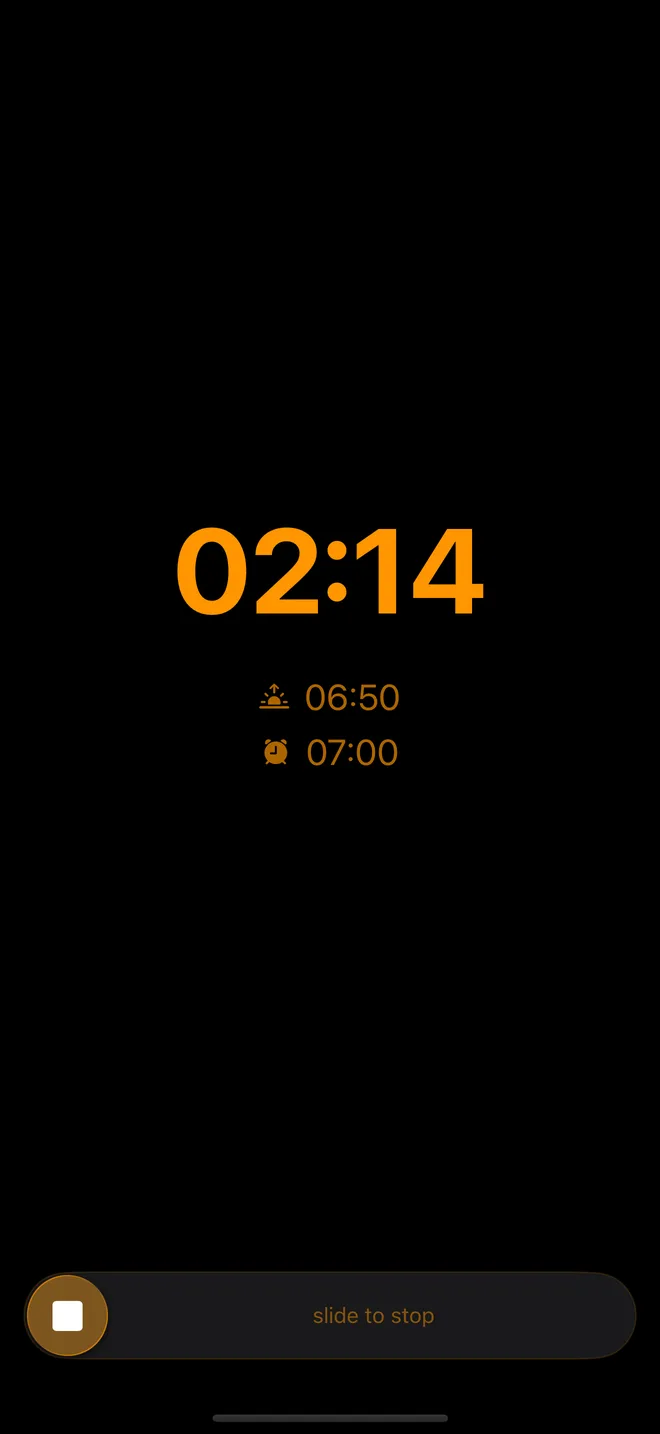
The most direct fix is to bring the light forward. A wake-up lamp or a wake-up light app brightens your bedroom before the alarm, so light arrives first and sound second. Glow Alarm does this with your iPhone's screen and flashlight: free, starting up to an hour before your alarm.
2. Keep the same wake-up time every day
A consistent time, including weekends, is the single most effective sleep habit you control. It matters even more when daylight isn't helping.
3. Find real daylight early
Open the curtains as soon as you're up, eat breakfast near a window, and get outside in the first hour or two if you can. Even a grey winter morning outdoors is far brighter than indoor lighting.
4. Make the first minute easy
Warm clothes on the chair, slippers by the bed, the kettle filled the night before. Fewer decisions while half-asleep means less time negotiating with the snooze button.
5. Dim the evening
Bright light late at night pushes your body clock later. Lower the lights and screen brightness in the last hour before bed.
6. Notice if it's more than tiredness
Feeling slower in winter is normal. Low mood that comes back every winter and gets in the way of life can be seasonal affective disorder. Read what a wake-up light can and can't do for SAD, and talk to a GP or doctor.
Set it up tonight
Choose your wake-up time, set the light to start 15–30 minutes before it, and leave your phone charging on the bedside table. Get Glow Alarm on the App Store.